Friday, March 20, 2015

One of Earth's Exotic Animals Explored #6


Earth's Ugliest Animal on this Planet that is becoming Extinct


The Creature
Now that you have seen the video and been aware of the world's ugliest animal. This jelly fish is Known as the Blob Fish. The scientific name is Psychrolutes marcidus. Also from the family called the Fat Heads. Their family name come from the Greeks  It is considered an endangered species because the fishing companies that have been over fishing the oceans. Are trying to catch shrimp and crabs but these ugly guys tend to get caught with them in the nets in the process.


Habitat

The Blob fish lives in the deep part of the ocean's typically around main lands such as Austrailia and Tasmania. The fish lives round with crabs and shrimp areas around those area's

Food
The fish floats around the ocean waiting for some type of edible creatures to eat such as urchins,shell fish and mollusks.


Interesting Facts
-The Blog Fish is considered the ugliest animal on the planet, due to the lack of people liking the fish,  people are not caring as much if this animal goes extinct.

-If you have ever watched Pokemon this creature reminds me of a Ditto, the little pink guys who transform into basically anything they want like a mirror image.

- They have no bones or teeth. They are basically a pile of fat that floats around the ocean.

- No Blob Fish has ever been caught alive so trying make them a pet will probably never happen.

                                                                    Source
                                                     http://ipfactly.com/blobfish/


Sunday, March 15, 2015

One of Earth's Exotic Animals Explored #5

  This Mysterious and Uhm Very Odd Animal


The Creature
What this very rare and unusually creature is called the Atretochoan eiselti, also known as the "Penis Snake". This species is the largest of the few known tetra pods, and one of two caecilians, to lack lungs. Its eye sight is very bad so it relays on its sense of smell to navigate to places,
The biggest Atretochoan eiselti we found is a female and it weights 570 grams and length up to a meter long.

Environment
This creature does not live in the water, but it does live in moist environments around streams. They tend to make their environments in burrowed holes they create. One of the few we have found we in South America around the Amazon Rain Forest.


Food
Nothing I can find out about their food.

Interesting facts
- This creature is not considered a snake.
- It breathes oxygen through its skin.
-Animals with no lungs typically relate to the salamander and some frog species which this creature is somewhat related to, its not related to the snake not even by a little.


Image result for the penis snakeImage result for the penis snake

Sources
http://news.mongabay.com/2012/0802-penis-snake-amazon.html

https://whyevolutionistrue.wordpress.com/2012/08/12/penis-snake/

Friday, March 6, 2015

One of Earth's Exotic Animals Explored #4

Have you ever thought about, is there an exotic animal that                                     has similar traits to humans?


                                                                     The Creature
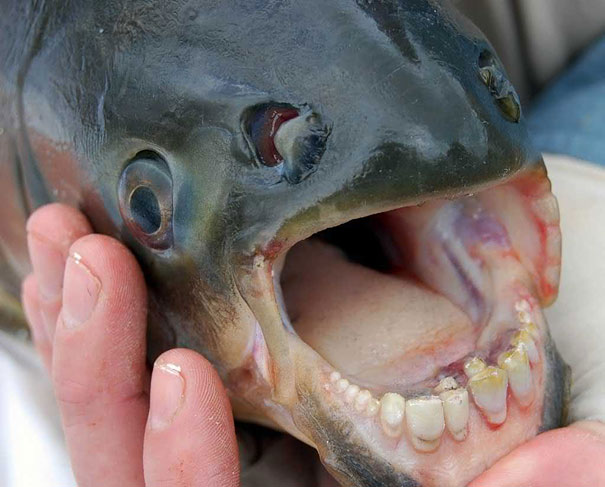
This weird human shape like teeth in this photo above is called, The Pacu Fish. Also known as the testes eating fish.They can get up to 3 ft long and weigh up to 55 lbs.


Food
Pacu fish are considered omnivores, meaning they will eat anything to meat to plant life.
Such as nuts, various meats like fish and mammals. To random plant life.


Habitat
Pacu fish mainly live in South America. Around the Amazon and Orinoco river. They have been spotted now and then through out the United States in various lakes.


Interesting Facts
- These fish are known for ripping off men testes.
- This fish is related to the Piranha fish family.
- Pacu is mainly used for the trading of aquarium fish life.
- These fish are typically ate in oriental restaurants also in their fish tanks.
- The Amazon river right now is experiencing an over fishing area right now with the Pacu fish                                                                                     since they are considered to be good eating.
                                                                                   -Texas has a $100 limit on who ever catches these fish and turns them in since their is a highly unusual report of pet owners of Pacu releasing these creatures into nearby lakes. Because they out grow their owners aquariums.

                                                                         Source
                                                     http://en.wikipedia.org/wiki/Pacu

Friday, February 27, 2015

One of Earth's Exotic Animals Explored #3

               Exotic  Animal in the Deep Dark Green Bush

The Creature
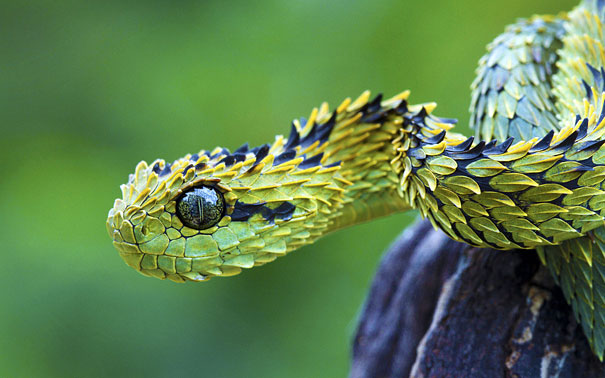
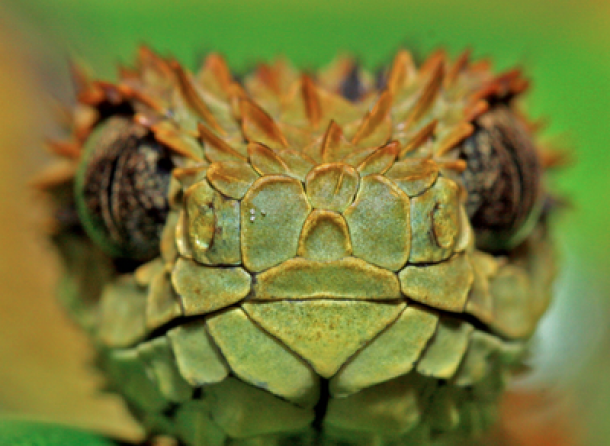
This interesting snake is called an Atheris also known as the Bush Snake. It is a very venomous snake. An adult snake can reach up to 3 inches long from head to tail. The species keep their rectangular head shape to help show their distinctiveness. This species of snakes come in a variety of different colors.


Food
They also  prey upon a variety of small amphibians, lizards, rodents, birds, and even other snakes, The prey is typically ambushed in a hanging position.
The habitat
Typically inhabit rain forests and places where human activity is limited.


Interesting facts
This type of species is considered on the endangered list for being over killed.
Not much is known about their venom expect that its hemotoxic.

Source
http://en.wikipedia.org/wiki/Atheris


Friday, February 20, 2015

One of Earth's Exotic Animals Explored #2


Exotic Animal in the Deep Dark  Blue World

The Creature
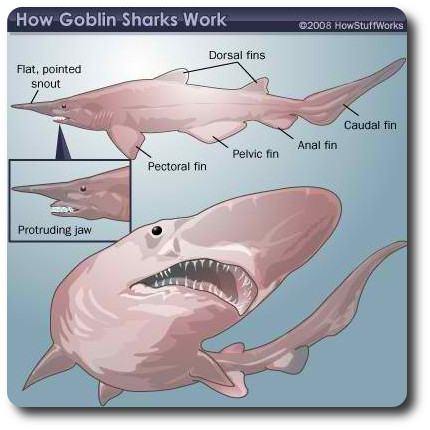
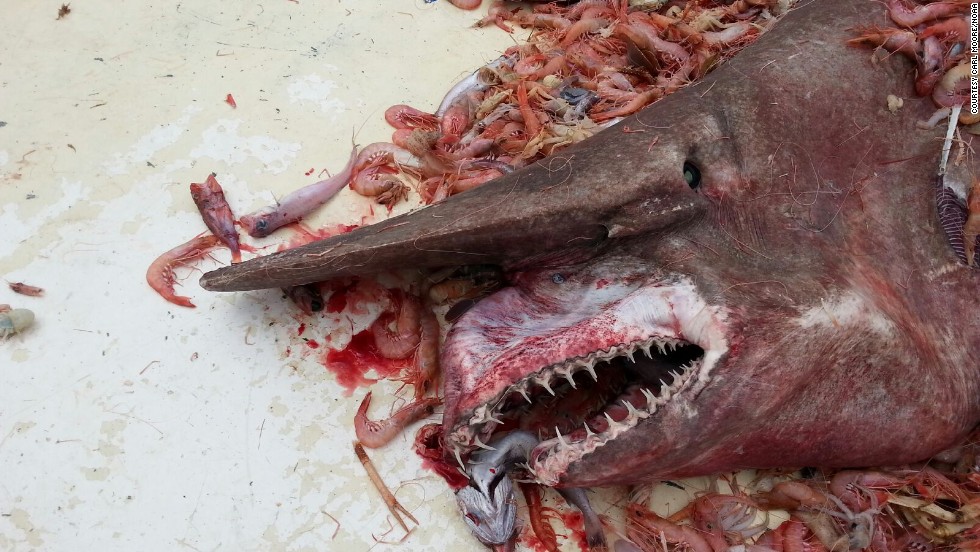
This majestic creature known as the Goblin Shark as known as a living fossil. Is a very rare breed of shark that lives in the deep blue see.. It is only related to the family of the Mitsukurinidae. The lineage of 125 million years old. The shark is 10 and 13 ft long when it is fully grown. Its jaws inside its mouth fold out and its razor sharp teeth are then displayed in a different manner.


Food
What this interesting shark eats is teleost fishes, cephalopods and crustaceans which is near the bottom of the sea floor and in the middle of the water column.
A shrimp fisherman caught a rare goblin shark off Key West.


The habitat
They typically live around upper continental slopes, submarine canyons and the sea mounts through out the world at depths greater then 330ft, such adults are found deeper then the juveniles.


Interesting facts
-The shark is a very slow swimmer.
-When the shark typically catches its prey it extends its jaws and points out its teeth then begins to perform a sucking motion to impale its prey with it's teeth.
-The shark is considered an endangered animal and if caught is fined, unless you are a deep see fisherman then you have to release it immediately.(The International Union for Conservation of Nature (IUCN)).

Friday, February 13, 2015

One of Earth's Exotic Animals Explored


Have you ever stopped and thought about what all could be living on this Earth at this very moment that you have probably never                                                   seen before?  

The Creature
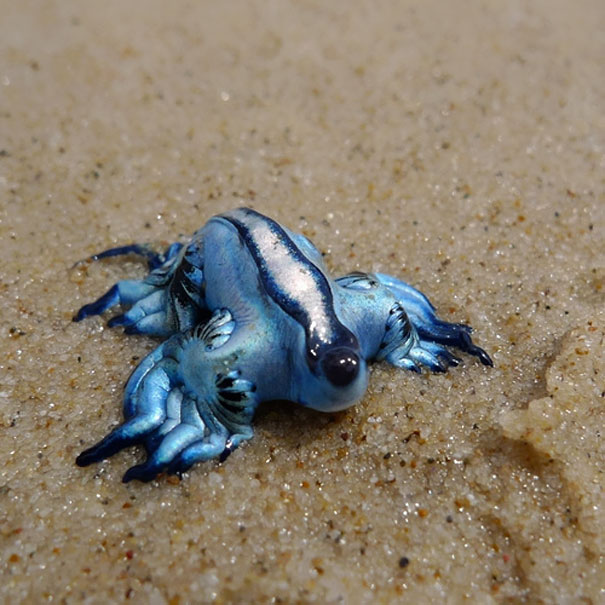
       I searched the web for some type of exotic specimen to show and talk about for today's blog topic. What I found was a creature named Glaucus Atlanticus "commonly known as the sea swallow, blue angel, blue glaucus, blue dragon, blue sea slug and blue ocean slug". Here is some information I found out about them on the web.
Food
   What these little guys eat is  hydrozoans (a group of animals in the same phylum as jellyfish)(" Glaucus Atlanticus",1) including the especially the highly poisonous Portuguese Man-O’-War. when ever you pick up the sea slug you might end up receiving a very painful sting, from the cnidarian venom the slug stores in its skin. Since this creature can store the poison in its tentacles hands for their own defense purposes.

The characteristics
They up to 3 centimeters in length.
Have 6 long finger like shapes on their fines.
They are blue bodies, with a gray stripe running through their back with 2 black stripes on either side.
The colors help provide a type of protective defense to help camouflage in the water, while protecting them from ultra violet lights.
Habitat and Behavior
         Live around the ocean mainly around Tropical climates. Such as  regions of East and South Coast of South Africa, European waters, the east coast of Australia and Mozambique.
The Glaucus Atlanticus typically moves around by drifting upside down on the ocean's current and breeze of the wind. Their swimming abilities are extremely slow.


--------------------------------------------------------------------------------------------------------------------------

References

unknown, Glaucus Atlanticus,http://eol.org/pages/451180/details,
elo encyclopedia of life,Jul.,1, 2011,web., Feb,13,15